Training with dumbbells at home can absolutely build strength and muscle—if you keep it simple and repeatable. You don’t need 50 exercises. You need a plan you’ll actually do, a way to progress, and a few form checks that keep you safe when you’re training without a coach.
Why dumbbells work so well at home
Dumbbells let you train:
- Full body without machines
- Unilateral strength (one side at a time) to fix imbalances
- Strength + muscle with a small amount of equipment
- Joint-friendly patterns using neutral grips and natural ranges
The “secret” is consistency + progression. Most people fail because they change workouts too often or they go too heavy and lose form.
The simple weekly plan (3 days, 30–45 minutes)
This is the easiest plan to stick with. Alternate two workouts (A and B).
Weekly schedule
- Mon — Workout A
- Wed — Workout B
- Fri — Workout A
Next week: B / A / B
If you want 4 days/week: do A / B / Rest / A / B / Rest / Rest.
Warm-up (5 minutes)
- 10 bodyweight squats
- 10 hip hinges (hands on hips, feel hamstrings)
- 10 arm circles each direction
- 10 scap squeezes (pull shoulder blades back and down)
- 1 light warm-up set of your first exercise
Workout A (Full Body: squat + push + pull)
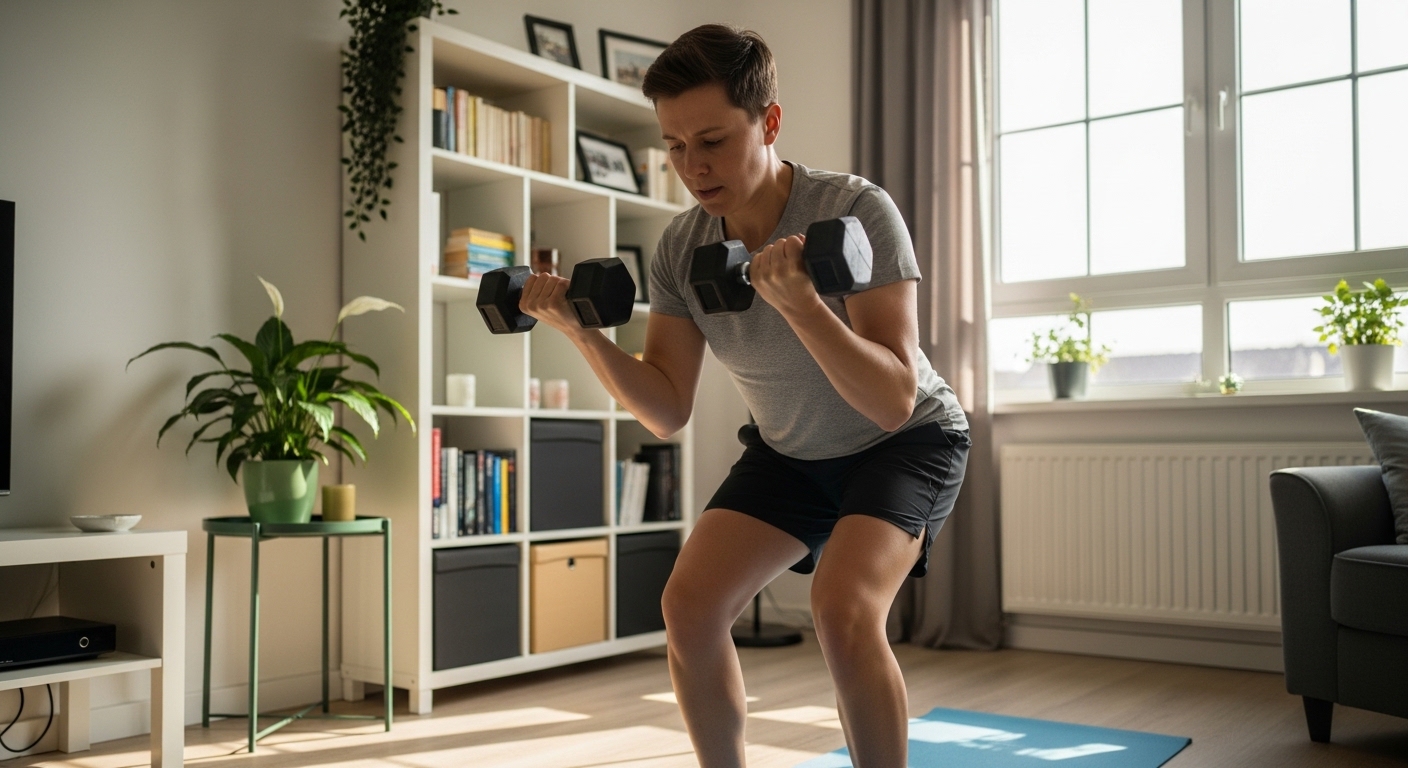
1) Goblet Squat — 3 sets × 8–12 reps
2) One-Arm Dumbbell Row — 3 sets × 8–12 reps each side
3) Dumbbell Floor Press (or bench press if you have one) — 3 sets × 8–12 reps
4) Romanian Deadlift (RDL) — 3 sets × 8–12 reps
5) Plank — 2–3 sets × 30–60 seconds
Rest: 60–90 seconds between sets.
Workout B (Full Body: hinge + press + legs + shoulders)
1) Split Squat — 3 sets × 8–12 reps each side
2) Dumbbell Overhead Press — 3 sets × 6–10 reps
3) Dumbbell Hip Thrust / Glute Bridge — 3 sets × 10–15 reps
4) Lateral Raise — 2–3 sets × 12–20 reps
5) Suitcase Carry (walk holding one dumbbell) — 2–3 rounds × 30–60 seconds each side
Rest: 60–90 seconds between sets.
Progressive overload (how to get stronger without overthinking)
You need a rule that tells you exactly when to progress. Here are the 3 easiest ways:
Method 1 (best for most people): Double Progression
Pick a rep range (example: 8–12).
- Stay at the same weight until you can hit 12 reps on all sets with clean form.
- Then increase weight and drop back to ~8 reps.
- Repeat.
Example for goblet squat:
- Week 1: 3×8
- Week 2: 3×10
- Week 3: 3×12
- Week 4: heavier weight → 3×8 again
Method 2: Add reps first, then sets
Beginners often progress fastest by adding reps for 2–3 weeks, then adding 1 set.
Method 3: Tempo progression (when you can’t go heavier)
If your weights are limited:
- Slow the lowering phase to 3 seconds
- Pause 1 second at the bottom
- Keep the same reps
This makes light dumbbells feel heavy without risking sloppy form.
How hard should your sets be? (simple intensity rule)
- Most sets should end with 1–3 reps left in the tank (not total failure).
- If your last reps are ugly—arching back, twisting, shrugging—stop the set.
This keeps you progressing without burning out.
Form checks (the ones that matter most)
When you train alone, form cues keep you safe and make reps count.
1) Goblet Squat form check
- Feet planted (don’t let heels lift)
- Knees track over toes (don’t cave in)
- Chest stays proud, ribs down
- Depth as long as your back stays neutral
Common mistake: knees collapsing inward → shorten range, slow down, or lighten weight.
2) Romanian Deadlift (RDL) form check
- Hinge at hips, slight knee bend
- Dumbbells stay close to legs
- Back neutral, neck long
- You should feel hamstrings, not lower back
Common mistake: turning it into a squat (too much knee bend). Think: “hips back.”
3) Row form check
- Flat back, brace core
- Pull elbow toward your hip (not straight up to shoulder)
- Don’t twist your torso to finish the rep
Common mistake: shrugging and turning rows into neck/trap work.
4) Pressing form check (floor press or overhead press)
- Wrists stacked over elbows
- Don’t flare elbows too wide
- Ribs down, don’t over-arch your back
- Move smoothly—no bouncing
Common mistake: over-arching to “cheat” overhead press → go lighter and brace.
How to choose your starting weights (easy and real)
For each exercise, pick a weight where:
- You can do the lower end of the rep range with clean form
- The last 2 reps feel challenging but controlled
- You don’t feel joint pain (muscle burn is fine)
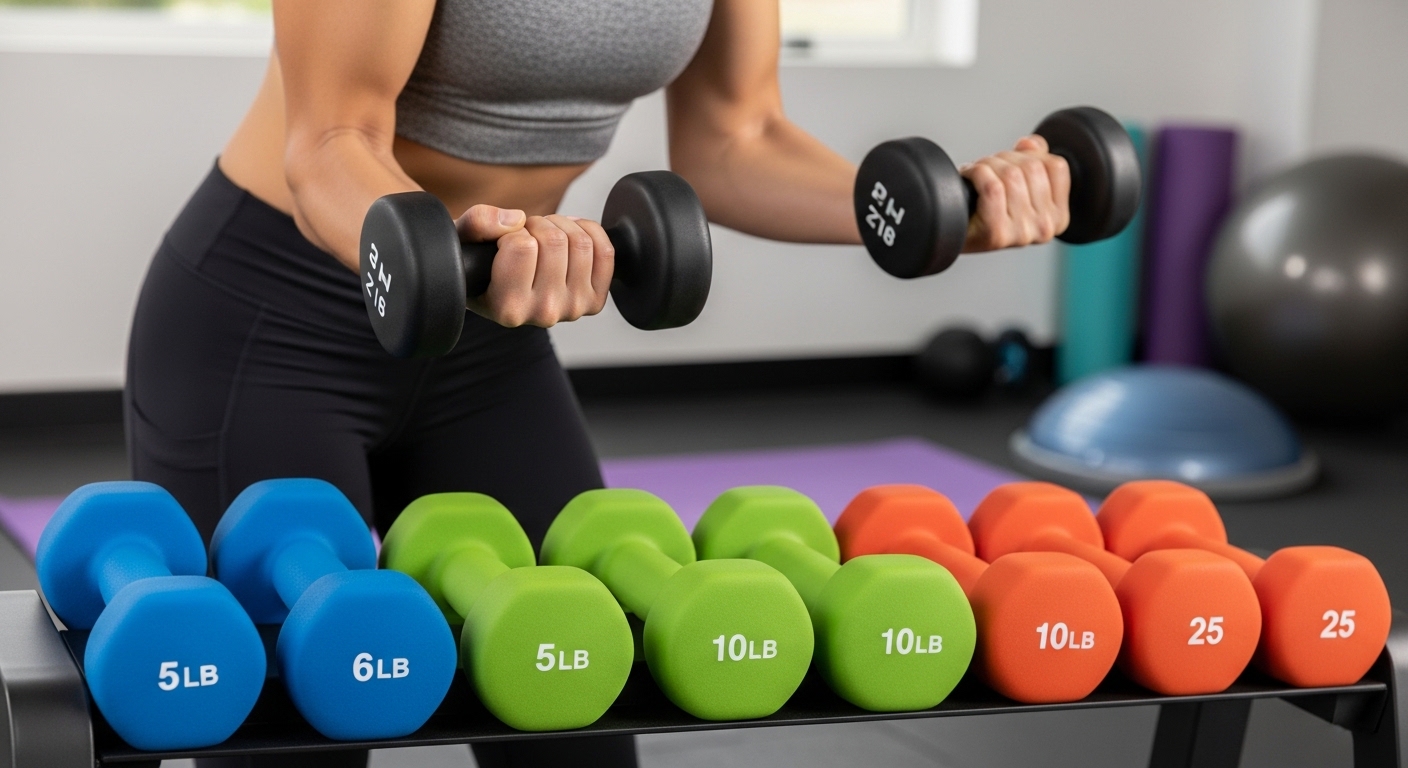
You’ll probably need at least two dumbbell options:
- Light/moderate for shoulders and arms
- Heavier for legs, hinges, and rows
A 4-week “stick with it” roadmap
Week 1: Learn the movements
Keep reps moderate and perfect form.
Week 2: Add reps
Try to add 1–2 reps per set on 2–3 exercises.
Week 3: Add weight (if you can hit top reps cleanly)
If not, use tempo (3 seconds down).
Week 4: Slight deload (optional)
Same exercises, slightly fewer sets—so you recover and come back stronger.
Common mistakes that stall progress at home
- Switching exercises every workout
- Going to failure constantly (fatigue builds fast)
- Skipping legs and hinge patterns
- Training too light with sloppy tempo
- No progression rule (no reps/weight target)
Final takeaway
If you train at home with dumbbells, the most effective plan is:
- 3 days/week
- Two workouts (A/B)
- Double progression (8–12 reps)
- Form checks on squat, hinge, row, and press
Do that for 8–12 weeks and you’ll be shocked how strong you get with “just dumbbells.”