Resistance bands look simple, but the type you choose changes how you train. Loop bands (big continuous bands or mini loops) and tube bands (with handles + clips) both build strength—just in different ways. If you pick the wrong type for your goal, you’ll either stall or get annoyed and stop using them.
Disclosure: Some links may be affiliate links. As an Amazon Associate I earn from qualifying purchases.
Quick answer (so you don’t have to read everything)
- Builds strength faster for most home workouts: Tube bands (with handles + door anchor)
They’re easier to load progressively and mimic cable-machine training. - Better for rehab and mobility: Loop bands (especially lighter loops and therapy-style loops)
They shine for controlled activation, joint-friendly patterns, and assisted range of motion. - Best “one-and-done” choice if you only buy one: Tube band set + door anchor
(Then add one light loop band later for warmups/rehab.)
What are loop bands and tube bands?
Loop bands
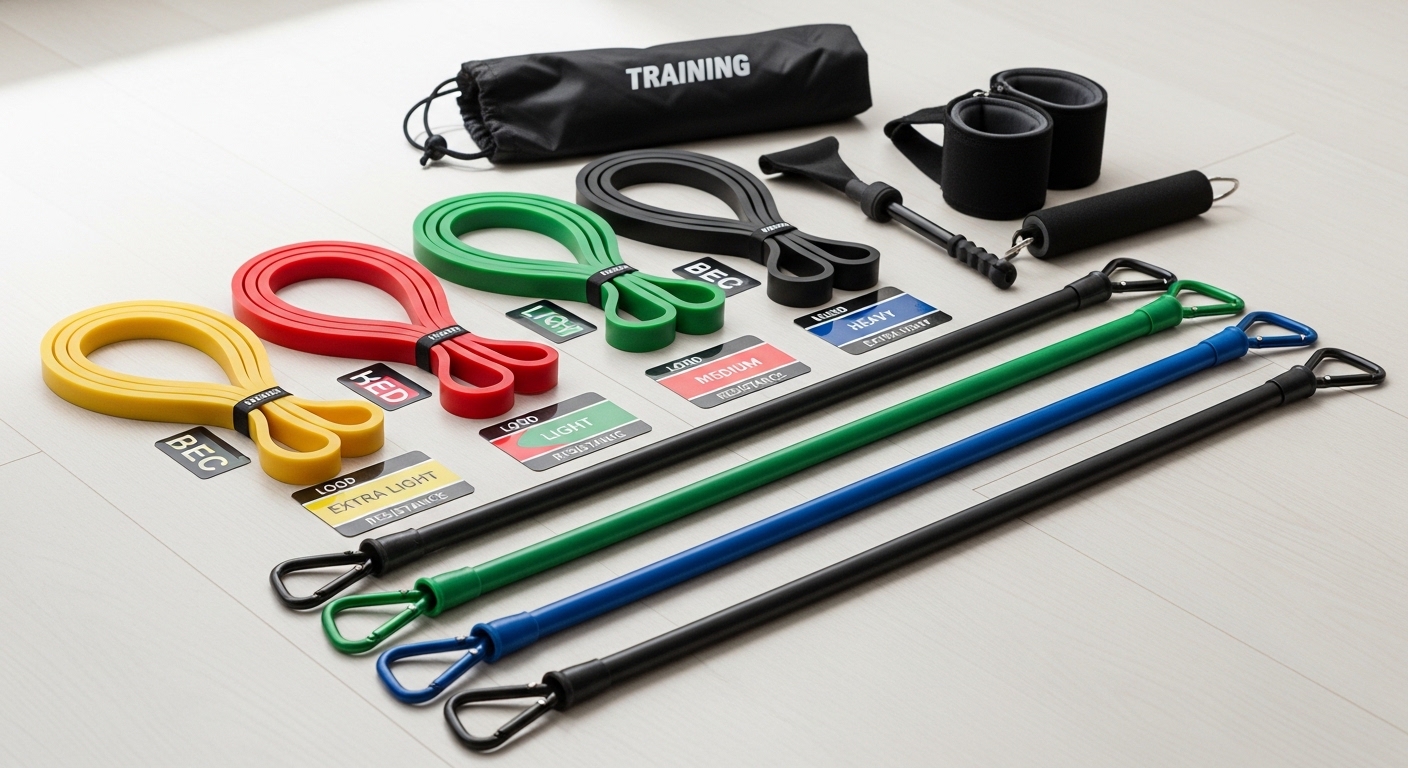
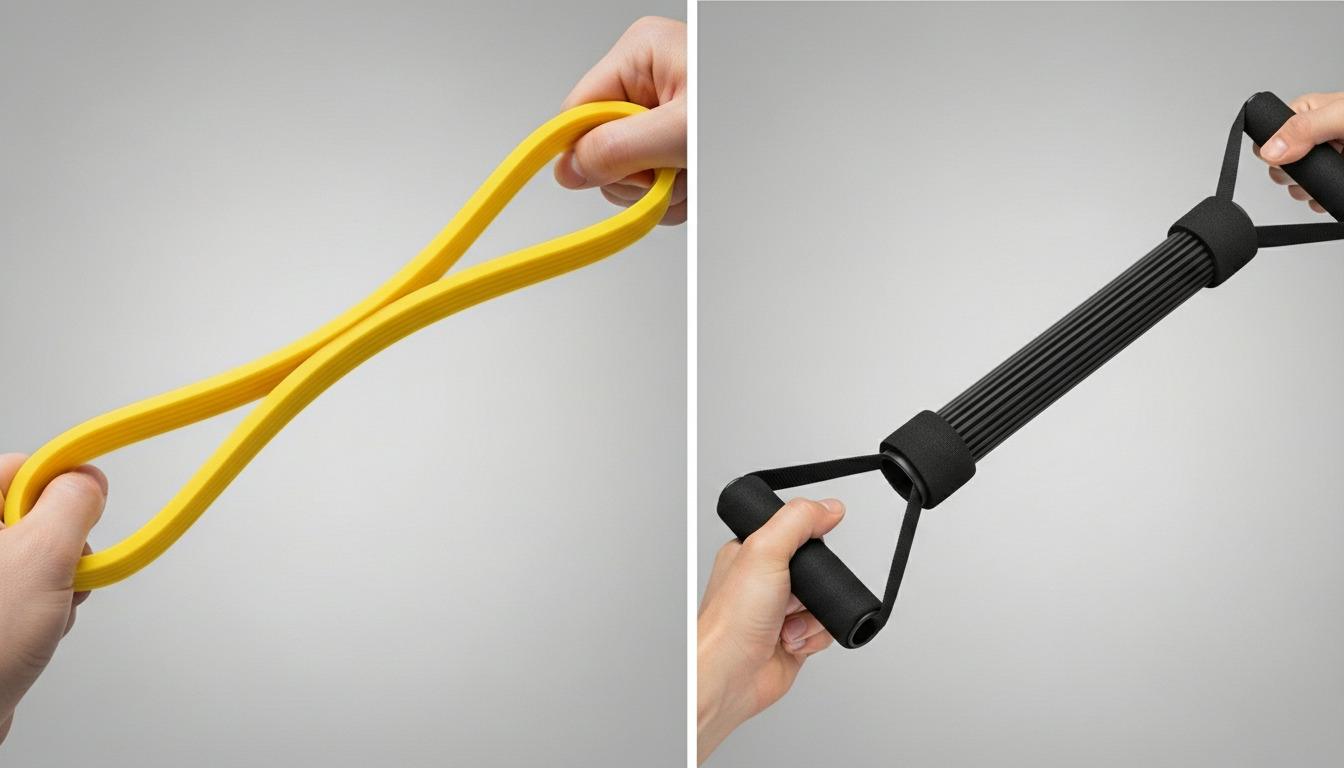
A continuous band with no handles. Common types:
- Power bands (large loops used for assisted pull-ups, stretching, heavy resistance)
- Mini bands (short loops used for glutes, hips, lateral walks)
Tube bands
Elastic tubes with handles, often with clips, ankle straps, and a door anchor. Resistance can be stacked by clipping multiple tubes.
Which builds strength faster?
Why tube bands often win for strength
If your definition of strength is “I want to get better at pushing/pulling movements and progressively overload,” tube bands usually do it faster because:
- Progressive overload is simpler: stack tubes = easy increments
- Movement feels more “gym-like”: handles + anchor mimic cable machines
- Better for upper body strength work: rows, chest press, triceps pressdowns, lat pulldown patterns
- More stable grip: handles reduce hand fatigue compared to gripping a flat band
Where you’ll feel it most: back, chest, shoulders, arms—especially if you anchor at different heights.
✅ Strength verdict: Tube bands generally build strength faster for most people training at home because they make heavy, repeatable loading easier.
Which is better for rehab?
Why loop bands often win for rehab + joint-friendly training
For rehab, you usually care about:
- controlled tension
- pain-free range of motion
- small muscles (stabilizers)
- easy setup and consistent technique
Loop bands are ideal because:
- Smoother, simpler setups: no clips or handles to shift
- Great for activation work: glute med, rotator cuff, scap stability
- Excellent for assisted movement: power bands can help you practice pull-ups, dips, or squats with less joint stress
- Less “jerk” risk from hardware: no carabiners that can twist or pinch
Where they shine: physical-therapy-style drills, warmups, mobility, glute activation, shoulder rehab work.
✅ Rehab verdict: Loop bands are usually better for rehab, especially light-to-medium resistance loops and mini bands.
Pros and cons (clear and honest)
Loop bands — Pros
- Best for rehab & activation: hips, shoulders, knees, ankle stability
- Great for assisted bodyweight moves: pull-ups, dips, mobility stretches
- Fewer failure points: no clips/carabiners to loosen
- Portable and simple: quick warmups anywhere
- Mini bands are elite for glutes: lateral walks, clamshells, bridges
Loop bands — Cons
- Harder to micro-progress: jumps between resistances can be big
- Less comfortable for heavy rows/pressing: gripping or wrapping can hurt
- Awkward for some moves: setup can get fiddly without handles
- Can roll/pinch skin: especially mini bands on bare legs
Tube bands — Pros
- Fast strength progression: stack tubes for easy overload
- Comfortable handles: better grip for high volume
- Cable-like training at home: door anchor unlocks dozens of exercises
- More intuitive for beginners: feels like “grab handles and go”
- Excellent for upper-body training: rows, presses, curls, triceps
Tube bands — Cons
- More parts = more failure points: clips/tubes wear over time
- Safety depends on quality + setup: door anchors must be solid
- Tubes can degrade: sunlight/heat/abrasion can shorten lifespan
- Can feel less stable for some rehab drills: especially tiny stabilizer work
Head-to-head comparison (what you should choose)
Choose tube bands if you want:
- Strength and muscle gain with progressive overload
- Full-body training that feels like cable machines
- Faster weight changes and more exercise variety
- Better comfort for pulling and pressing
Choose loop bands if you want:
- Rehab, prehab, mobility, and joint-friendly training
- Glute activation and hip stability work
- Assisted pull-ups/dips and stretch-based mobility
- A simple tool you’ll use daily (warmups, travel)
“Optimal” choice: what’s best for most people?
If your goal is build strength at home, the best overall choice is:
✅ Tube band set with handles + door anchor
Because it gives you the most repeatable overload and the widest exercise selection.
Then, add this later (cheap, small, and worth it):
✅ One light-to-medium mini loop band
For glute activation and rehab warmups.
That two-band combo covers almost everything: strength + rehab + mobility.
Real-world programs (how to use each)
Best tube band strength moves
- Door-anchored rows (mid + low anchor)
- Chest press (door anchor behind you)
- Lat pulldown pattern (high anchor)
- Triceps pressdowns (high anchor)
- Split squats with handles (constant tension)
Progression tip: add reps → slow tempo → add another tube.
Best loop band rehab/activation moves
- Lateral band walks (mini loop)
- Clamshells (mini loop)
- Glute bridge abductions (mini loop)
- Shoulder external rotations (light loop)
- Assisted pull-ups or mobility stretches (power band)
Rehab tip: keep pain ≤ 3/10, move slow, stop before form breaks.
Safety notes (don’t skip)
- Inspect bands weekly: cracks, sticky spots, fraying, stretched ends
- Don’t leave tubes in hot cars or direct sunlight
- With door anchors: close the door fully and pull-test lightly first
- Don’t overstretch bands past their safe range (especially tubes)
FAQs
Can bands really replace dumbbells?
For many exercises, yes—especially upper-body pulling/pushing. For heavy lower-body strength, bands are great but may require creative setups or pairing with bodyweight.
Which is better for knees and hips?
For rehab and stability, loop bands (mini loops) usually win because they’re perfect for controlled activation.
Are loop bands or tube bands safer?
Loop bands have fewer hardware failure points. Tube bands can be safe too—if the tubes, clips, and door anchor are quality and you inspect them.
Final verdict
- Build strength faster: Tube bands (handles + door anchor)
- Better for rehab: Loop bands (mini loops + light therapy loops)
- Best overall setup: Tube band set + one mini loop band