Buying your first dumbbells shouldn’t feel like a gym bro test. As a beginner, you need weights that feel good in your hands, don’t wreck your wrists, and make it easy to progress without turning your living room into a mini warehouse.
Disclosure: Some links may be affiliate links. As an Amazon Associate I earn from qualifying purchases.
What beginners should look for (and what to skip)
Your first dumbbells should be “boring good.” Safe, grippy, and easy to use multiple times a week.
Beginner-friendly checklist
- Comfortable grip: not too thin, not too slick, and doesn’t dig into your palm
- Stable shape: hex heads (or a rack) so they don’t roll away mid-workout
- Clear progression: multiple weights or an adjustable set so you can level up
- Quiet + floor-friendly: neoprene or rubber-coated is kinder on apartments
- Right starter range: most beginners need at least one lighter pair and one moderate pair
Avoid (at least for your first set)
- Bare metal handles that feel slippery when sweaty
- Odd shapes that roll around
- “Too heavy too soon” single pairs that limit your form and consistency
Best dumbbells for beginners (top picks)
1) Neoprene-Coated Dumbbells (multiple colors/weights) — Best Overall for Most Beginners
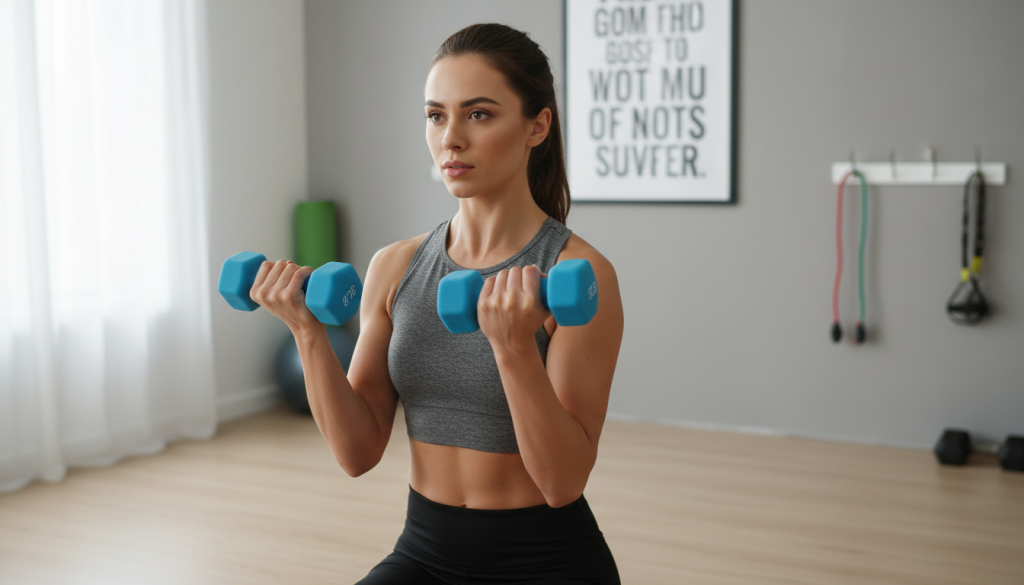
Why this is the best starter pick: Neoprene-coated dumbbells are comfortable, grippy, and forgiving. They’re the easiest to actually stick with because they feel good in-hand, don’t scare you, and work for a ton of beginner routines.
Best for
- Home workouts, beginner strength, low-impact cardio strength
- Upper body basics (rows, presses, curls, triceps)
- Light lower body accessories (goblet squats, RDLs, lunges)
Pros
- Soft, comfortable coating that helps with grip
- Quiet and floor-friendly (less clank)
- Great for high reps and learning form
Cons
- If you get stronger, you’ll eventually need heavier options
- Neoprene can show wear over time if stored in heat/humidity
Real-user take: If you’re starting from zero, these make working out feel approachable. They’re the “no excuses” dumbbell.
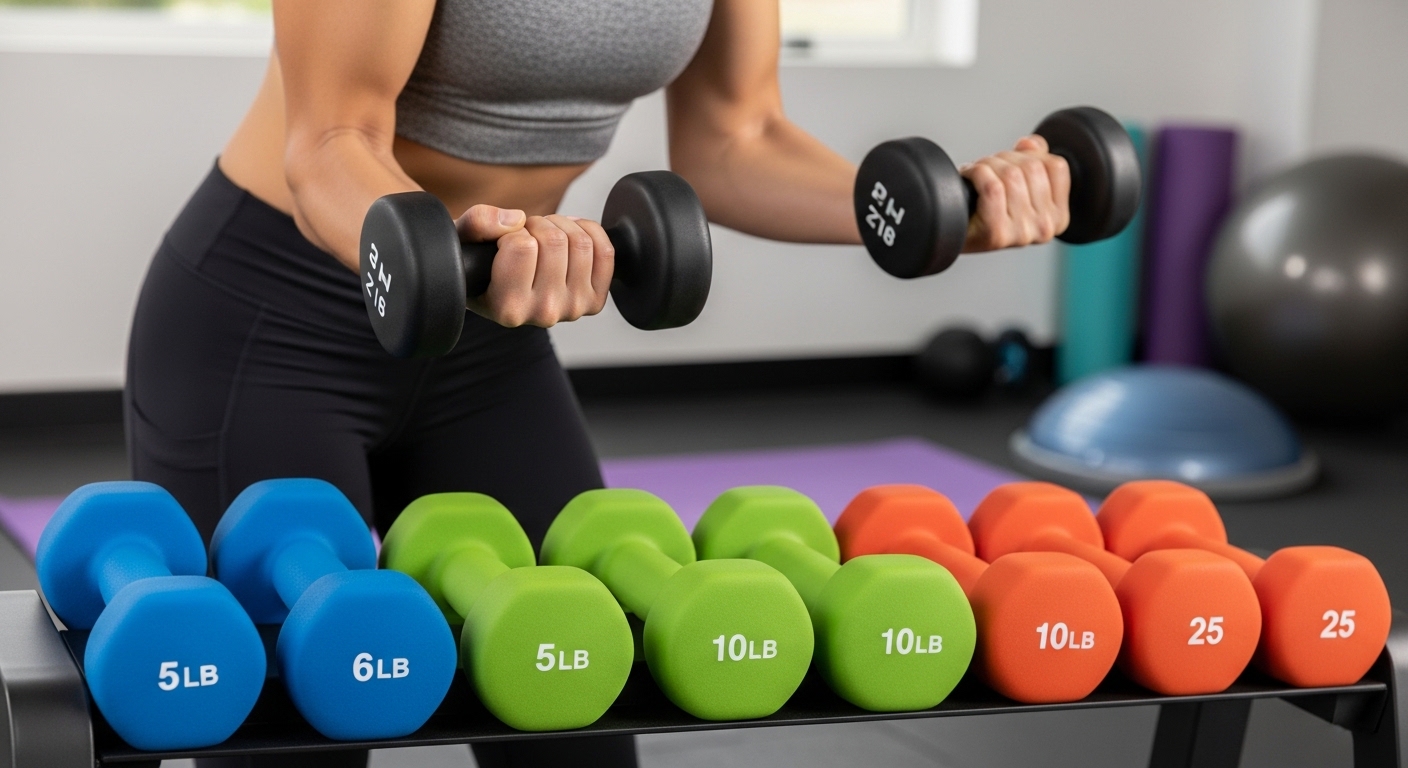
2) 10-Pair Neoprene Set + Rack — Best “One-and-Done” Home Setup
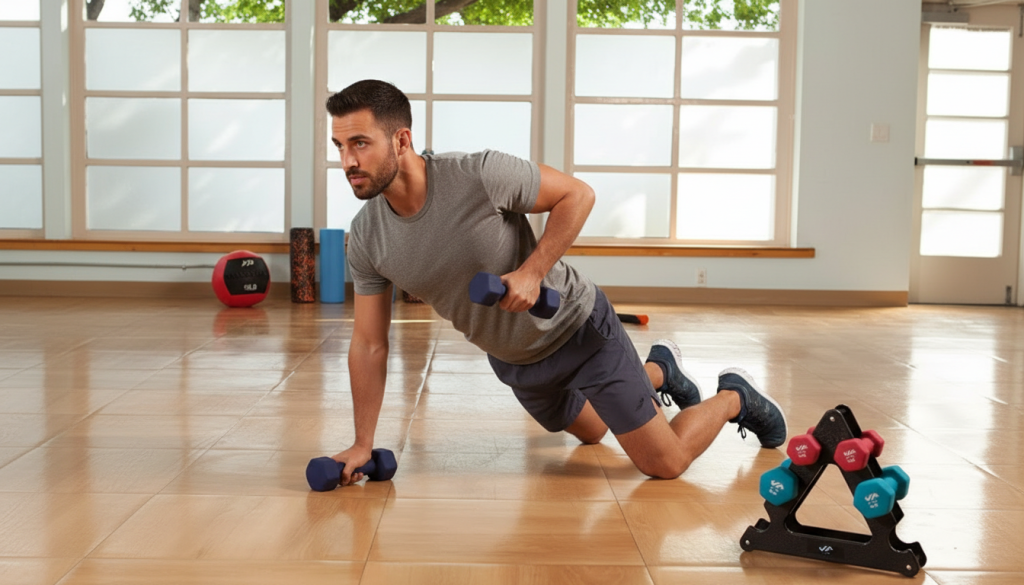
Why it’s great: This is the cleanest solution for beginners who want structure. You get multiple weight options plus a rack so your space stays organized and you can progress smoothly.
Best for
- Couples/families sharing one setup
- People who want to follow programs without constantly “needing another weight”
- Small spaces where mess kills motivation
Pros
- Instant progression: you always have the next step ready
- Rack keeps dumbbells accessible (you’ll use them more)
- Great for full-body training, supersets, and circuits
Cons
- Takes up a bit more footprint than a single pair
- You’re committing to a “home gym corner”
Real-user take: If you know you’re serious about building a habit, a rack set is the easiest to live with. Convenience = consistency.
3) Adjustable Beginner Dumbbells (4-in-1 style) — Best for Small Apartments
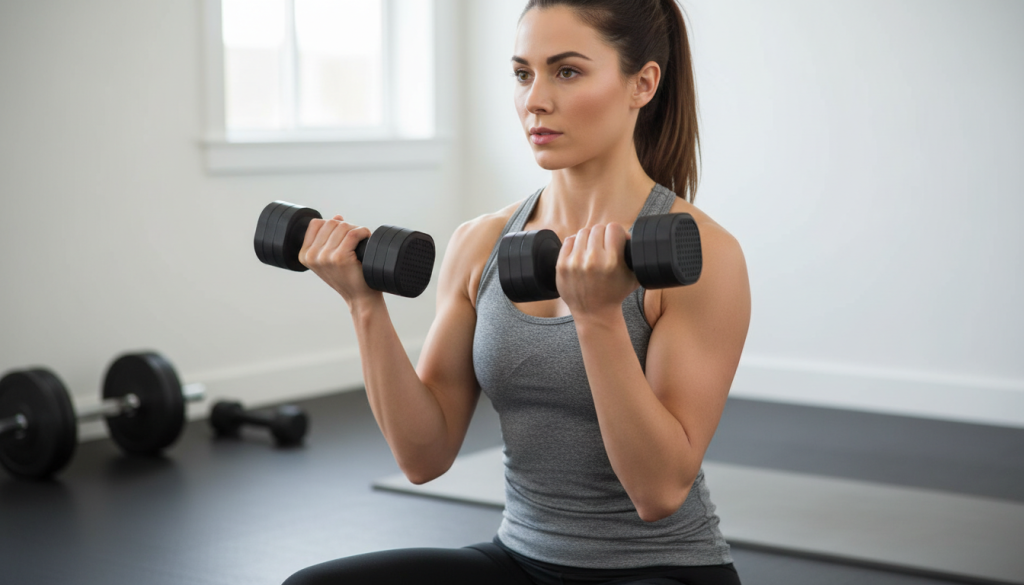
Why it’s great: Adjustable dumbbells are perfect when space is tight. Beginners benefit because you can start light and increment up without buying a bunch of pairs.
Best for
- Studio apartments / dorms
- Beginners who want progression with minimal clutter
- People doing full-body workouts with multiple exercises
Pros
- Space-saving with built-in progression
- Good for learning what weights you actually need
- Less visual clutter = more likely to stay consistent
Cons
- Changing weights can slow your workout flow
- Adjustables usually aren’t as “grab-and-go” as fixed pairs
- Some designs feel bulkier in-hand than standard dumbbells
Real-user take: If storage is your #1 problem, this is the smartest solution. You’ll have more options without buying more stuff.
4) Rubber-Coated Hex Dumbbells (pairs) — Best “Grow-With-You” Choice
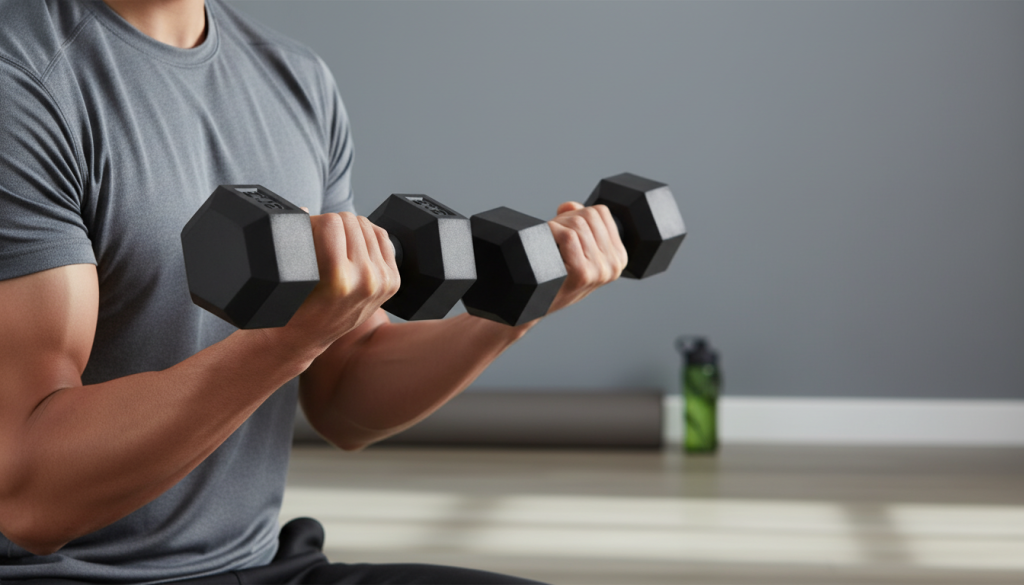
Why it’s great: Hex dumbbells are stable, safe, and feel like “real gym” gear. Rubber coating helps with grip and protects floors. This is the best option if you want something you won’t outgrow quickly.
Best for
- Beginners who plan to get stronger (and stay stronger)
- Classic strength training: rows, presses, squats, RDLs
- People who like a more solid, durable feel
Pros
- Hex shape = no rolling (safer and less annoying)
- Rubber coating is grippy and floor-friendlier
- Durable and scalable as you increase strength
Cons
- Bulkier than neoprene for the same weight
- Harder on floors than neoprene if you’re careless (use a mat)
Real-user take: If you want to build strength long-term, start with a lighter pair now and add heavier pairs as you go.
Quick comparison (which one fits you?)
- Most beginners: Neoprene-coated pairs (#1)
- Want a tidy, complete home setup: Rack set (#2)
- Tight on space: Adjustable 4-in-1 (#3)
- Want gym-style dumbbells you can keep long-term: Rubber hex (#4)
Safe progression: the simplest way to get stronger
Beginners don’t need complicated programming—just consistent practice and small upgrades.
The easiest beginner progression plan
- Pick two weights (or two settings):
- Light: for shoulders/arms (12–20 reps)
- Moderate: for rows/squats/RDLs (8–12 reps)
- When you can do 12 reps with good form for all sets, move up slightly.
Form rule: If your shoulders hike, wrists bend, or your lower back takes over—drop weight and control the rep.
A beginner workout you’ll actually stick with (20 minutes, 3x/week)
Do 2–3 rounds, rest ~45–75 seconds between moves.
- Goblet squat – 10–12 reps
- One-arm row – 10–12 reps each side
- Floor press (or standing press) – 8–12 reps
- Romanian deadlift – 10–12 reps
- Biceps curl + overhead triceps extension – 10–12 reps each
Tip: Start lighter than you think. Consistency beats “one heroic workout.”
Final verdict (best dumbbells for beginners)
If you want the best mix of comfort, grip, and beginner-friendly use, go with neoprene-coated dumbbells as your first purchase. They’re the easiest to handle, the least intimidating, and the most likely to keep you training week after week.
If your #1 priority is long-term strength building, choose rubber-coated hex dumbbells and add pairs over time.